PARTS & ASSEMBLY
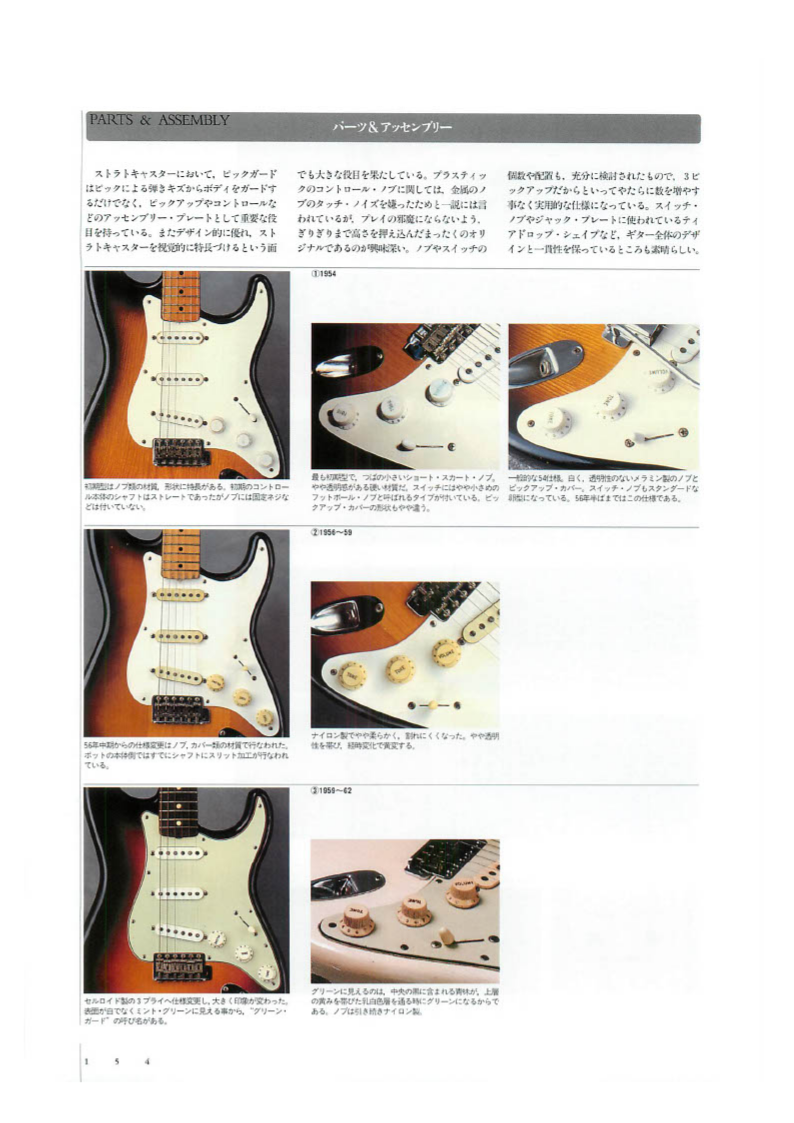
On the Stratocaster, the pickguard does more than simply protect the body from pick scratches. It also serves the important function of an assembly plate on which the pickups, controls, and other components are mounted. Its excellent design also plays a major role in giving the Stratocaster its distinctive visual identity.
As for the plastic control knobs, one theory holds that plastic was chosen to avoid the touch noise associated with metal knobs. Whatever the reason, their extremely low-profile design, kept as low as possible so as not to interfere with playing, was entirely original to this model and is particularly noteworthy. The number and placement of the knobs and switch were also carefully considered. Despite having three pickups, the Stratocaster avoided overbearing proliferation of controls and instead adopted a highly practical layout.
Another outstanding feature is the design consistency found throughout the instrument, including the teardrop-shaped elements used for the switch tip and jack plate, which harmonize with the overall styling of the guitar.
CAPTIONS
① 1954
Left: The earliest version is distinguished by the materials and shapes of its knobs. The shafts of the early control pots were straight cylinder, yet the knobs were not fitted with set screws or any other means of fastening them in place.
Center: The very earliest version, featuring low-profile, short-skirt knobs with relatively small flanges, made of a hard, slightly translucent material. The switch is fitted with a somewhat smaller type commonly known as a “football” tip. The shape of the pickup covers are also slightly different.
Right: The standard 1954 configuration. The knobs and pickup covers are made of white, opaque melamine. The switch tip has also changed to the standard egg shape. This configuration remained in use until mid-1956.
② 1956–1959
Left: The specification change introduced in mid-1956 involved the material used for the knobs and covers. By this time, the shafts of the control pots had already been changed to the split-shaft type.
Right: The new parts were made of nylon, which was somewhat softer and less prone to cracking. They have a slightly translucent appearance and tend to yellow with age.
③ 1959–1962
Left: The change to a three-ply celluloid pickguard dramatically altered the appearance. Because its surface appears mint green rather than white, this type is commonly known as the “green guard.”
Right: The mint green appearance results from bluish black center layer showing through white top layer which is partially translucent. The knobs continued to be made of nylon.
P155
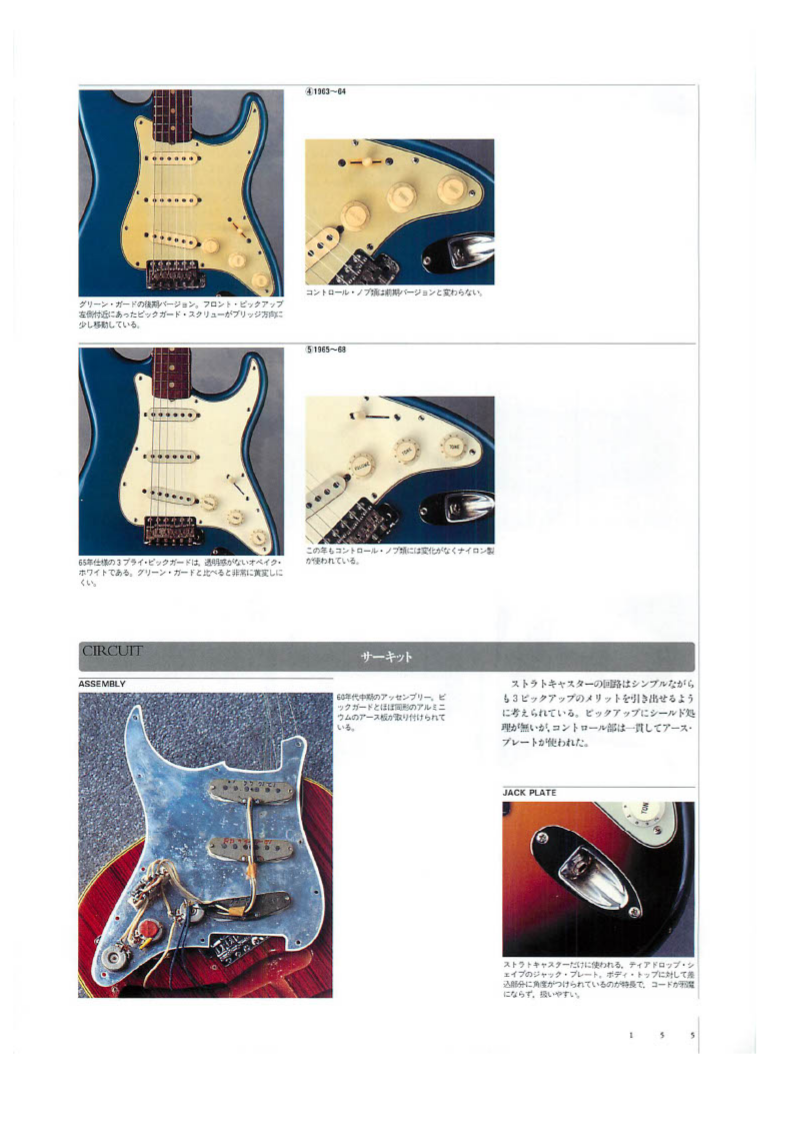
④ 1963–1964
Left: A later version of the green guard. The pickguard screw that had been located near the left side of the neck pickup was moved slightly toward the bridge.
Right: The control knobs remained unchanged from the earlier version.
⑤ 1965–1968
Left: The three-ply pickguard introduced in 1965 is an opaque white with no translucency, due to the nature of updated material, ridid vinyl. Compared with the green guard, it ages less yellow, to the color of parchment.
Right: There was again no change to the control knobs, which continued to be made of nylon.
CIRCUIT
Although the Stratocaster’s circuitry is simple, it was designed to take effective advantage of its three-pickup configuration. The pickups themselves were not shielded, but a grounding plate was consistently used in the control area which was later expanded to areas around pickups.
CAPTIONS
ASSEMBLY
A mid-1960s assembly. An aluminum grounding plate, shaped almost exactly like the pickguard, is fitted beneath it.
JACK PLATE
The teardrop-shaped jack plate is unique to the Stratocaster. Its distinctive feature is that the jack is mounted at an angle relative to the top of the body, keeping the cable out of the player’s way and making it easy to handle.